
Last updated November 25, 2026
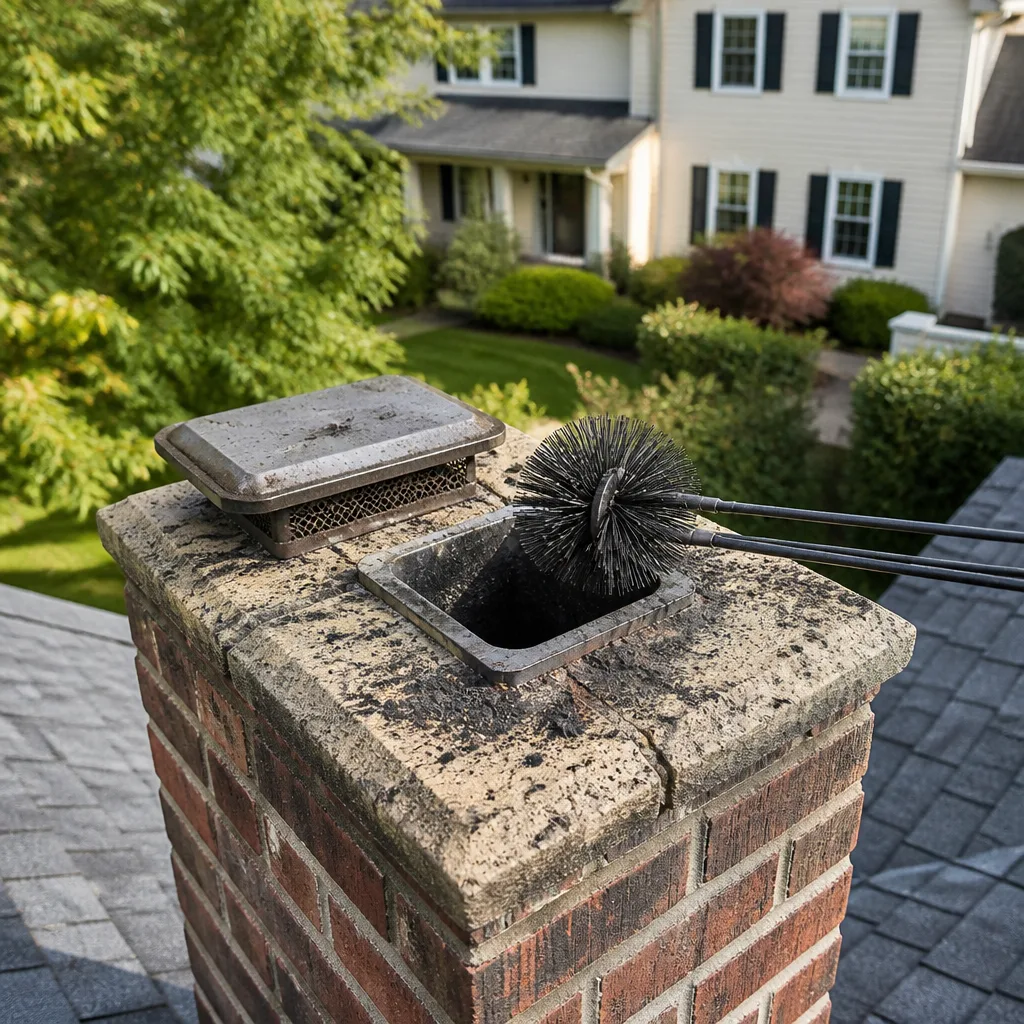 Sweep & inspection
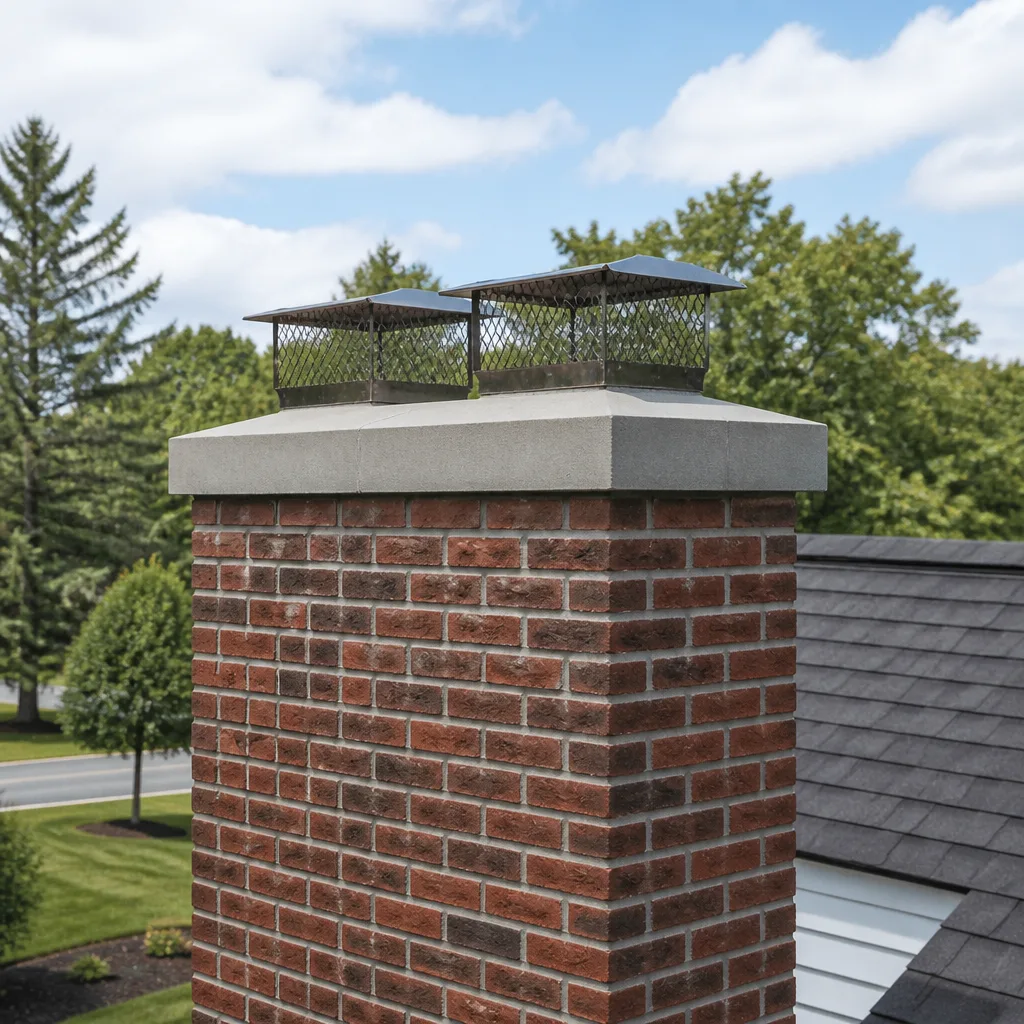 Caps & crowns
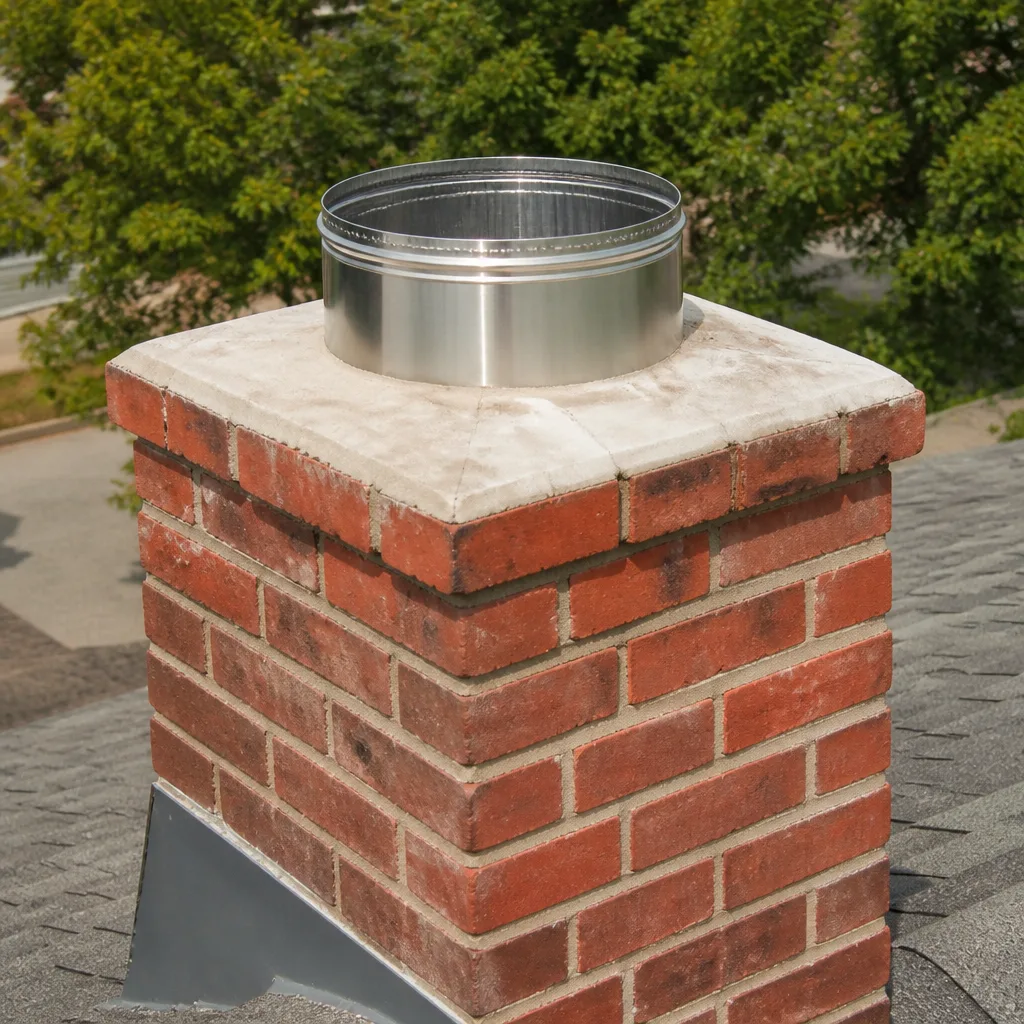 Flue relining
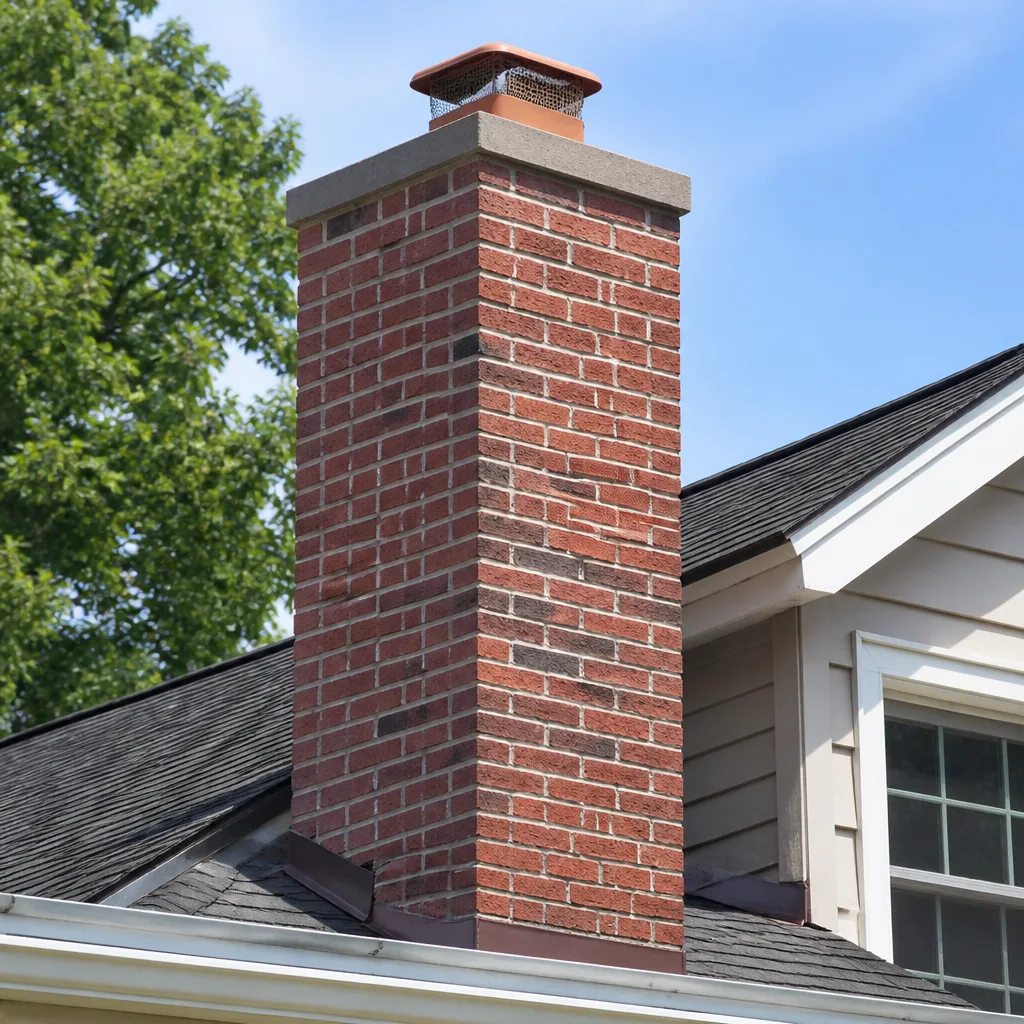 Masonry repair
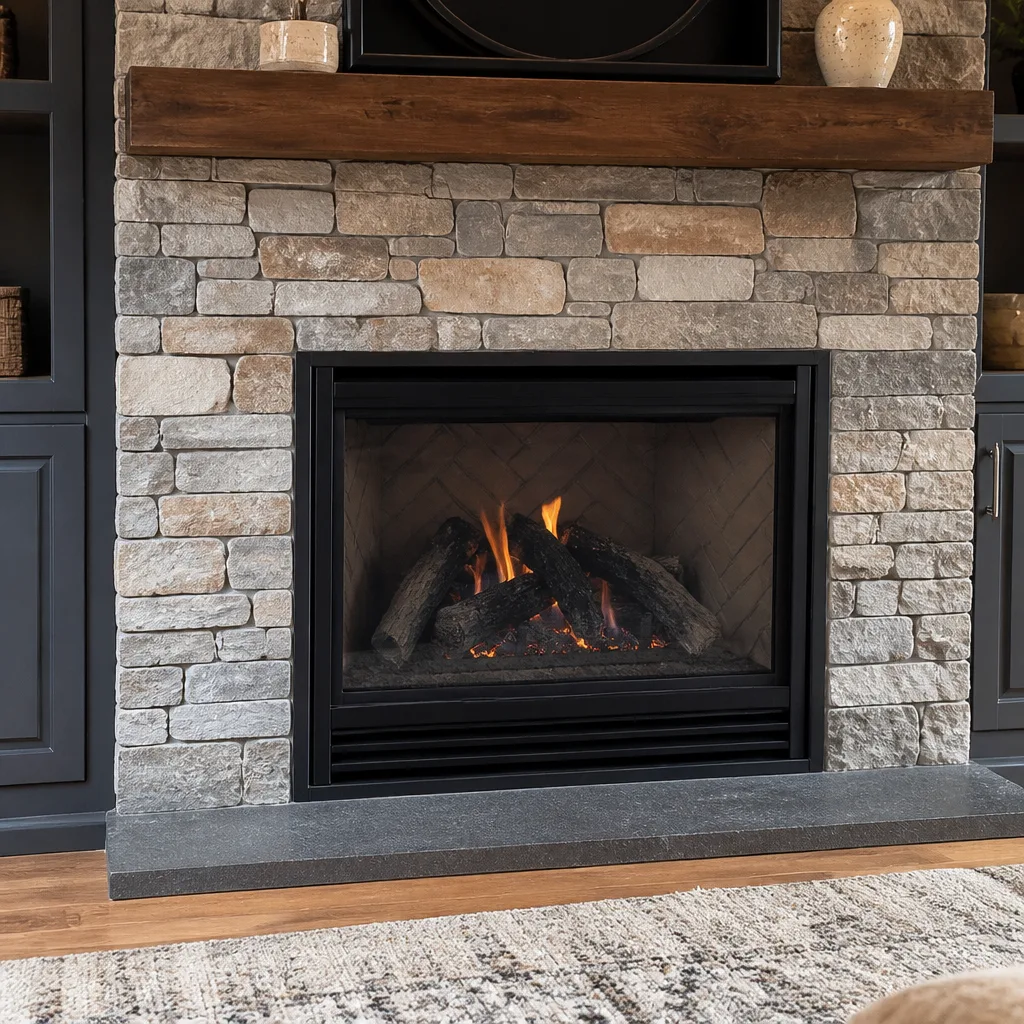 Gas fireplace service
Level 1 sweep and inspection to the NFPA 211 annual standard - flue, crown, cap, and flashing checked and photographed
Chimney sweep logs do not sweep chimneys. They loosen some creosote - which then falls where a brush and vacuum still have to collect it.
The Complete Guide to Chimney Cleaning in Wakefield
Most Wakefield homeowners think of chimney cleaning as one job: someone comes, brushes the flue, leaves. That mental model is why so many chimneys get “cleaned” every year and still fail inspection. A sweep is only one layer of a process that also includes inspection at a defined level, an honest read on liner condition, and a check on whether the whole system actually drafts the way it should. Skip a layer and you may never know it. There’s also a detail almost no low-price provider spells out: a Level 1 inspection and a Level 2 inspection are different services with different scopes, and many cut-rate sweeps in New York perform only the first without telling you. This guide maps every layer of a proper chimney cleaning in Wakefield so you know exactly what you’re buying, what gets missed when you go cheap, and how to read the report you get afterward.
Quick Answer
A complete chimney cleaning in Wakefield is a three-part visit: a Level 1 inspection to assess the system, a mechanical sweep to clear soot and creosote, and a post-sweep check that confirms the flue is actually clear and the liner is intact. A brush-only sweep with no inspection attached is not the same service, even when the price looks similar. Homes with older masonry often need a Level 2 inspection – a camera-based look at the flue interior – before anyone can honestly say the chimney is safe to use.
Styles & brands we work with
- Sweep & inspection
- Caps & crowns
- Flue relining
- Masonry repair
- Gas fireplace service
Table of Contents
- What a Chimney Cleaning Actually Involves: The Four Layers
- Inspection Levels 1, 2, and 3: Which One Does Your Wakefield Home Need?
- How Creosote Forms in Three Stages (And Why a Brush Won’t Fix All of Them)
- Why Wakefield’s Older Housing Stock Creates Specific Liner Risks
- Step by Step: What a Full-Spectrum Cleaning Visit Looks Like
- How to Read Your Post-Service Report
- What Chimney Cleaning Costs in Wakefield
- How Often Should a Wakefield Chimney Be Cleaned?
What a Chimney Cleaning Actually Involves: The Four Layers
Chimney cleaning is a layered process, and each layer has its own standard and its own failure mode. When a service skips a layer, the homeowner usually has no way to tell – the flue looks clean from the firebox and the price was low.
Here’s how the four layers break down:
- Inspection. Before any brush touches the flue, a technician assesses the system: firebox, damper, smoke chamber, flue, cap, crown, and the visible exterior. The inspection level determines how deep that assessment goes, and it should always come first.
- The sweep itself. Mechanical cleaning of the flue with brushes sized to the liner. This is the layer everyone knows about, and it’s the least technical part of the job.
- Liner condition. The flue liner is what keeps combustion products inside the chimney and away from the framing of the house. A sweep can leave a liner looking fine while cracks, gaps, or spalling go undetected without a camera.
- Draft and performance. A clean flue that drafts poorly is still a hazard. Draft depends on flue sizing, termination height, cap condition, and whether the chimney is pulling properly for the appliance connected to it.
When we talk about a full-service chimney visit in Wakefield, this is what we mean: all four layers addressed in one pass, with the findings written down so you can see what was checked. A sweep-only service typically handles layer two and stops. That’s not dishonesty by default – it’s just a narrower product. The problem is that homeowners often assume they got all four when they only got one.
Chimney-only specialists are trained to see the interactions between these layers. A plumber or roofer who offers chimney work as a side service is generally looking at the chimney in isolation from the rest of the system. A specialist looks at the flue, the appliance, the termination, and the house together.
Inspection Levels 1, 2, and 3: Which One Does Your Wakefield Home Need?
The three inspection levels come from the standard used across the chimney trade, and they aren’t interchangeable. A Level 1 is a visual check of readily accessible parts. A Level 2 adds a video camera scan of the flue interior. A Level 3 goes further, opening concealed areas of the chimney structure – and it’s only called for when a Level 2 finds a problem serious enough to require it.
For Wakefield specifically, the inspection level matters more than it does in newer construction. Here’s the practical breakdown:
- Level 1: Appropriate when the appliance and chimney are unchanged since the last inspection and everything is readily visible. This is the standard annual inspection for a chimney with a known, sound liner.
- Level 2: Required after a change in the system (new appliance, liner replacement, flue resizing), after a chimney fire, after a property transfer, or when the flue is not fully visible without a camera. For older masonry chimneys in Wakefield, this is the level that actually reveals liner problems.
- Level 3: Diagnostic and invasive. If a Level 2 camera scan shows a hidden defect – a displaced liner tile, a gap behind the smoke chamber – the next step is opening the structure to see it.
Many low-price sweeps in New York do a Level 1 visual check (or no formal inspection at all) and call it done. If you have a pre-1970s brick chimney and you’ve never had a camera inspection, a Level 1 alone may not tell you what you need to know. Ask any provider directly: which level is this, and does the price include a camera?
The honest starting point for any chimney visit is the inspection. Everything else – whether the chimney needs sweeping, whether the liner can be repaired with a HeatShield resurfacing application, whether a DuraFlex liner is the right replacement – depends on what the inspection finds. A provider who recommends work before inspecting is working backwards. If you want the inspection done as a standalone service, that’s a legitimate ask, and it should stand on its own.
How Creosote Forms in Three Stages (And Why a Brush Won’t Fix All of Them)
Creosote is the residue left behind when wood smoke cools inside the flue. It builds in three stages, and each stage is a different problem requiring a different tool.
- Stage one: soot and flaky powder. A thin, dusty coating that brushes off easily with a standard flue brush. Most routine sweeps deal almost entirely with this stage.
- Stage two: crusty, flaky deposits. A harder layer with a rough surface. A brush will remove the loose outer material, but the deposits cling to the flue walls. Getting to bare masonry takes more aggressive mechanical work.
- Stage three: glazed, hardened creosote. A shiny, tar-like coating that has baked onto the flue. It looks almost like a plastic liner. A standard brush will slide right over it without removing it.
Stage-two and stage-three creosote is where a cheap sweep becomes a real problem. The technician brushes, the flue looks better, and the report says “cleaned.” But the most combustible material in the chimney is still there, and glazed creosote is the material most associated with chimney fires. A brush is not designed to remove it.
In our experience, stage-three creosote is more common in chimneys that burn unseasoned or wet wood, are run with the damper partly closed, or are connected to older appliances with poor draft. In Wakefield, where plenty of homes burn wood as a real heat source rather than just decorative fires, the risk is real. The same goes for homes with gas inserts – creosote isn’t the issue there, but condensation and flue corrosion can be.
When a chimney has reached stage three, the solution is usually a professional-grade chemical treatment followed by mechanical removal, and in some cases the liner needs to be restored with a HeatShield application or replaced entirely with a DuraFlex liner. This is why “sweep” and “clean” aren’t the same word. A proper sweep clears stage one and can handle stage two. A proper cleaning deals with what the sweep found.
Why Wakefield’s Older Housing Stock Creates Specific Liner Risks
Much of Wakefield’s housing predates 1970, and that matters for chimney work. A chimney built with older brick-construction methods and original clay tile liners has been exposed to fuel oils, wood smoke, and decades of thermal cycling. Clay tile liners can spall, crack, and shift. Mortar joints between tiles can fail. The metal or masonry material inside the chimney can have gaps that don’t show up from the firebox.
Routine sweeping alone will not catch this. The brush glides over a cracked tile the same way it glides over a sound one. This is why a Level 2 video inspection is often the right call for older Wakefield masonry chimneys – without a camera, the liner is invisible.
When the liner is compromised, the risks are specific:
- Combustion products can leak into the house through cracks, including carbon monoxide.
- Heat can transfer to the surrounding framing, which is a fire risk even if no flame reaches it.
- The chimney’s draft can be thrown off by any gap or misaligned tile, causing smoke to spill into the room when the fire is lit.
Older Wakefield homes also often have chimney systems that were designed for one type of appliance and have since been connected to another – a wood stove added to a fireplace flue, or a gas insert added to a chimney meant for solid fuel. Those changes are exactly the situation that calls for a Level 2 inspection and, sometimes, a liner upgrade with a DuraFlex system sized to the new appliance.
None of this means every older chimney in Wakefield needs thousands of dollars of work. Plenty of them just need a sweep and a clean bill of health. The point is that you can’t know which one you have without looking, and the looking is what a proper inspection does.
Step by Step: What a Full-Spectrum Cleaning Visit Looks Like
Here’s the sequence a full-service chimney visit follows, in the order the technician actually performs it. If a provider can’t describe their process in roughly this shape, they may be offering a narrower service than you think.
- Client walkthrough. Before work begins, we ask what you burn, how often, and whether you’ve noticed smoke spillback, odor, or draft problems. Those answers shape what the technician looks for.
- Level 1 inspection (or Level 2 if warranted). Visual check of the firebox, damper, smoke chamber, flue opening, and exterior at the top. If the chimney is older masonry or the liner isn’t fully visible, a camera scan follows.
- Floor and firebox protection. Drop cloths and HEPA-grade containment setup, so cleaning soot doesn’t end up in your living room.
- Mechanical sweep of the flue. Brushes sized to the liner, with a rotary tool where needed. This is where creosote stages one and two get cleared.
- Firebox and smoke chamber cleaning. The area below the flue and the shelf above it (the smoke chamber) collects just as much soot as the flue and needs its own cleaning pass.
- Liner and cap check. After the sweep, the liner gets another look. The cap and crown are checked for cracks, spalling, or a missing screen – a damaged cap lets in water and wildlife, and both cause expensive problems.
- Draft check. A quick test to confirm the system is pulling as it should once the flue is clear. Poor draft after cleaning is a real finding and worth flagging.
- Report and written estimate. Findings documented, photographs where the camera was used, and a written estimate for anything that needs attention – with a clear statement of what can wait.
That’s the full loop. Notice where the cleaning sits in it – in the middle, not at the end. Cleaning is the step between inspection and reporting. When you call the Wakefield Chimney Sweep Pros team, this is the process you get.
The cap and crown part of that list matters more than most homeowners realize. A cap with a torn screen lets birds and squirrels nest in the flue. A cracked crown lets water into the chimney structure, where it freezes and spalls the brick over the winter. Cap and crown work is its own trade, and the products matter – a Gelco or Olympia Chimney cap is designed for the exposure, where the hardware-store version often isn’t.
How to Read Your Post-Service Report
A post-service report is the only evidence you’ll have of what happened inside your chimney. A useful one will tell you four things, and you should be able to see every one of them:
- What was cleaned and to what degree. “Swept” alone doesn’t say much. Look for the flue, firebox, and smoke chamber named specifically, and for any residual creosote noted by stage.
- What was inspected. The report should state the inspection level, not just “inspected.” Level 1, 2, or 3 tells you the scope.
- What was found. Cracks, gaps, spalling, a missing cap screen, a damper that doesn’t close – these should be documented, and if a camera was used, you should be offered the photos.
- What’s recommended, and what can wait. This is where a good provider separates from a bad one. A report that recommends work without evidence, or that treats every finding as urgent, is worth second-guessing.
The question every homeowner has is some version of: “How do I know this report is honest?” The answer is camera evidence. If a chimney professional tells you the liner needs work, the camera scan should be available for you to look at. If the recommendation is a liner restoration with HeatShield, you should see the condition that makes restoration necessary. If it can safely wait until next season, the report should say so.
It’s worth saying plainly: a large portion of the work recommended after a chimney sweep in Wakefield can wait. Hairline surface cracks in a crown, a slightly worn cap screen, a damper that sticks but still functions – none of these are emergencies. What can’t wait is a compromised liner, a missing cap over an open flue, or creosote at stage three. If a report blurs those categories together, get a second opinion.
What Chimney Cleaning Costs in Wakefield
Chimney cleaning pricing in the Wakefield market breaks down roughly into inspection, sweep, and findings-driven work. Here are typical ranges for the local market, quoted as estimates – your written estimate is what sets the final price.
- Standard sweep with Level 1 inspection: $180 to $320
- Level 2 camera inspection (standalone): $150 to $300
- Sweep plus Level 2 inspection: $300 to $500
- Cap installation (Gelco or Olympia-grade): $250 to $600 installed, depending on size and material
- Crown repair or rebuild: $350 to $1,200, depending on extent
- Liner restoration (HeatShield resurfacing): $1,500 to $4,500, depending on flue size and condition
- Liner replacement (DuraFlex or equivalent): $2,500 to $6,500, depending on height and appliance
Two things to be careful of in the Wakefield market. First, a low advertised price for a “chimney cleaning” often covers a brush pass only, with no inspection attached. Second, a price that includes an inspection should tell you which level. If a provider can’t answer “which level is that?” clearly, the inspection part isn’t worth much. The chimney sweep service we recommend starts with an agreed flat price, so you know the cost before anyone touches the flue.
Liner restoration and chimney repair pricing varies more than anything else on the list because it depends entirely on what the camera shows. HeatShield resurfacing is a professional-grade option that restores a damaged flue from the inside, and for the right chimney it costs far less than full liner replacement. For chimneys beyond restoration, a DuraFlex liner replacement is the durable solution. The inspection is what tells you which category you’re in – which is why the honest starting point is always to inspect first, then recommend.
How Often Should a Wakefield Chimney Be Cleaned?
Once a year for a wood-burning chimney is the standard recommendation, and for Wakefield homes that burn regularly through the heating season, annual cleaning is the right baseline. The catch is that “cleaned annually” is a floor, not a ceiling – some chimneys need a mid-season check as well.
Circumstances that call for more frequent cleaning, or an inspection outside the annual cycle:
- Burning green or unseasoned wood, which produces more creosote per cord than seasoned wood.
- Burning frequently over long stretches, which deposits more material than occasional fires.
- Noticing creosote buildup visible on the damper or firebox walls.
- Any change in the system – new appliance, new insert, or a change in the liner.
- After any chimney fire, even a small one. Visual inspection alone is not enough in that case; a Level 2 camera scan is the standard.
Gas insert owners have a different schedule. The creosote risk is lower, but the flue still accumulates material and the liner still needs inspection for corrosion and condensation damage. An annual inspection is still the right call.
Older masonry chimneys in Wakefield deserve a specific note: if you’ve never had a Level 2 camera inspection and your home predates 1970, arrange one. It doesn’t have to be tied to a sweep. Once you know the liner condition, you know what schedule makes sense.
For more on how these visits fit together, our page on chimney cap & crown work covers the top-of-system side of the annual check.
Common Mistakes to Avoid
- Booking a sweep with no inspection attached. If the service doesn’t specify an inspection level, you don’t know what you’re getting. A brush pass with a verbal “looks fine” is not the same as a documented inspection.
- Taking a low price at face value. A cheap chimney cleaning often reflects a narrower service, not a discount. Ask exactly what’s included before you book, including the inspection level and whether a camera is used.
- Skipping the Level 2 camera on an older Wakefield masonry chimney. If the house predates 1970 and you’ve never had a camera scan, the liner is a question mark. Camera inspection is the only way to actually see it.
- Assuming a clean-looking firebox means a clean chimney. The loosest, most flammable creosote sits high on the flue walls, where you can’t see it without a camera. Visible cleanliness at the bottom proves very little.
- Accepting repair recommendations without seeing the evidence. If a provider recommends liner work, ask to see the camera footage or photos. A recommendation you can verify is worth considering; one you can’t is worth a second opinion.
- Ignoring the cap and crown. A damaged cap screen is an open invitation for wildlife, and a cracked crown lets water into the masonry where freeze-thaw does the rest. Neither shows up from inside the fireplace, and both cause expensive damage over time.
- Burning wet wood to save money. Unseasoned wood produces more creosote and less heat. What you pay for in firewood, you pay again in cleaning frequency and fire risk.
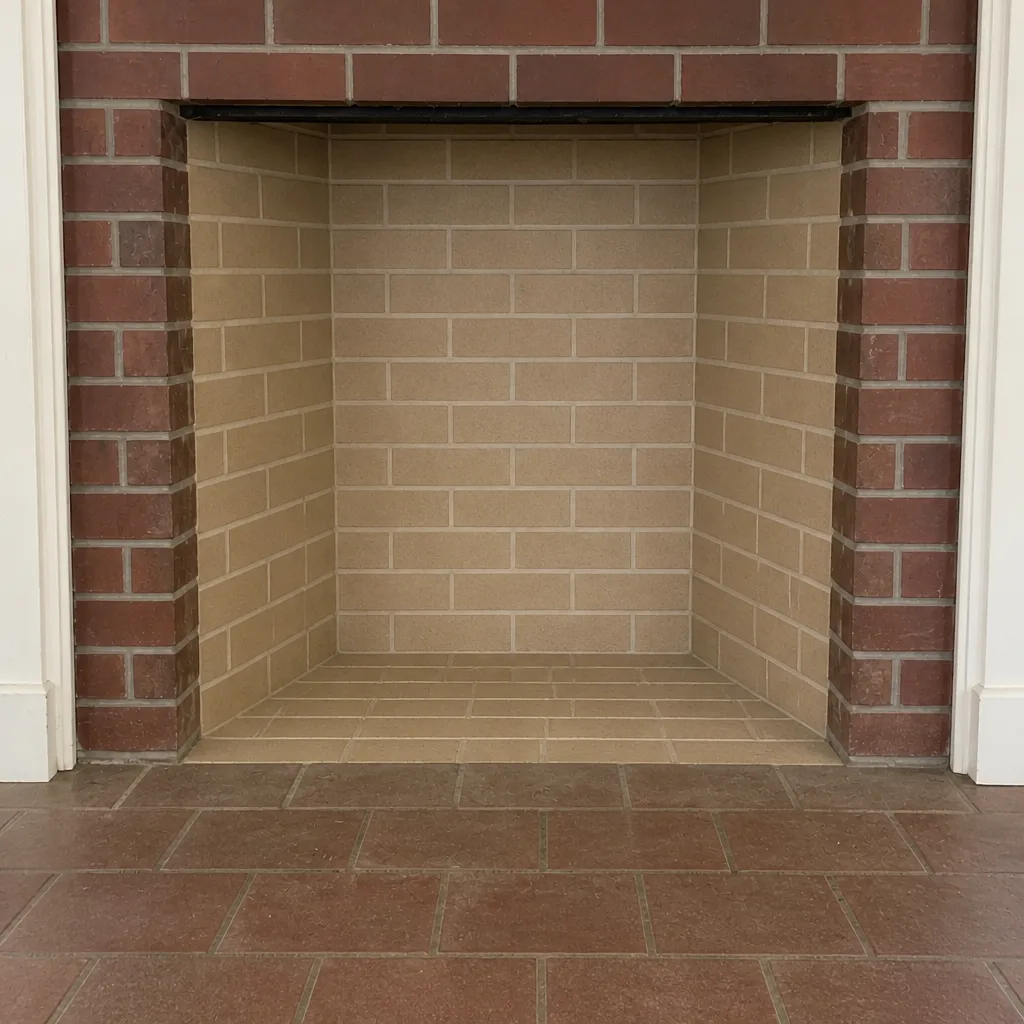
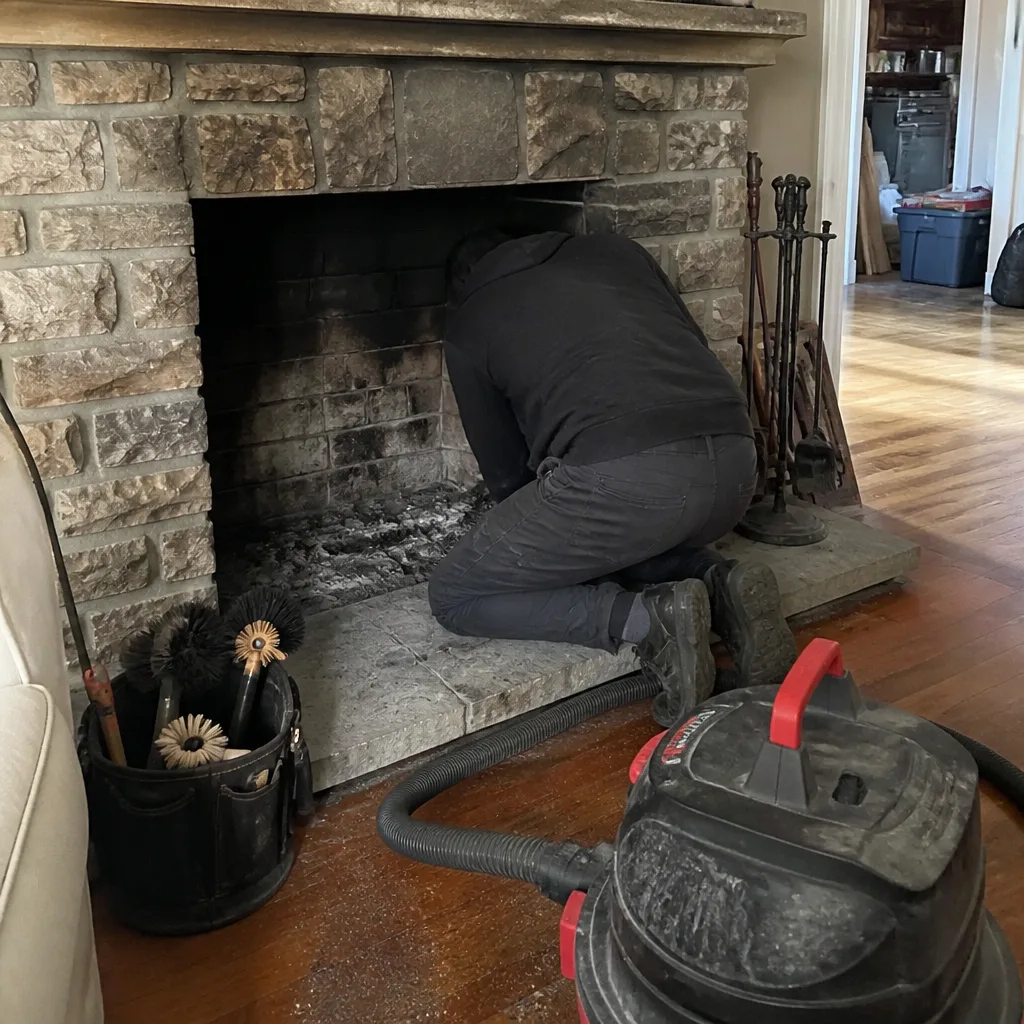
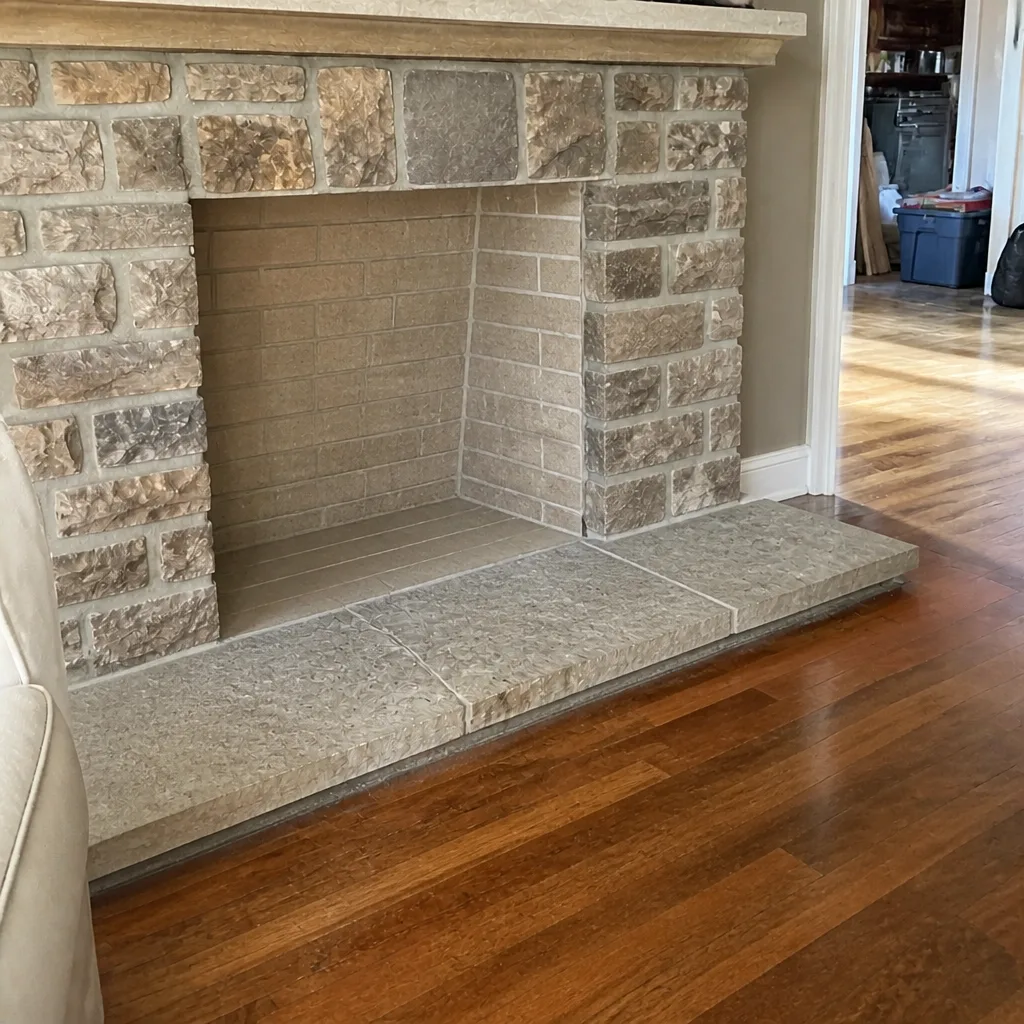
See the difference
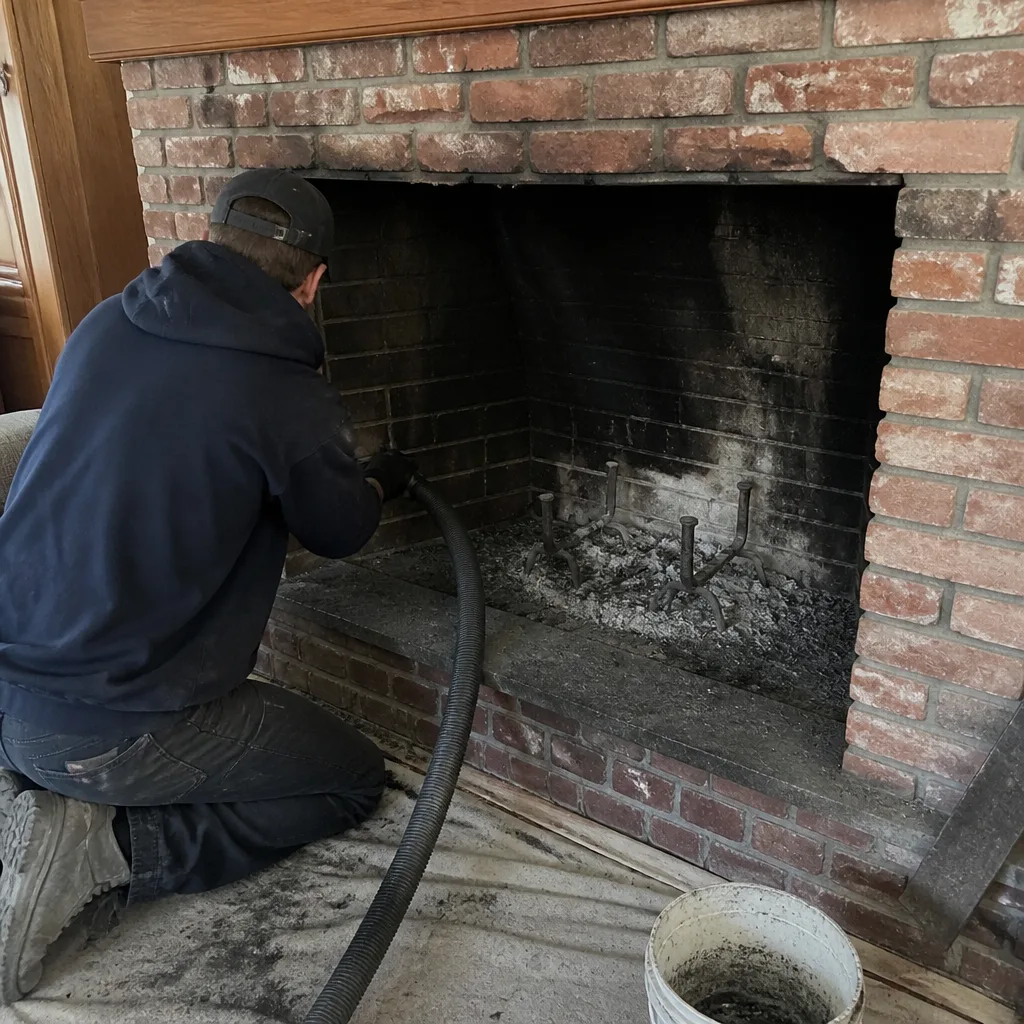 Before
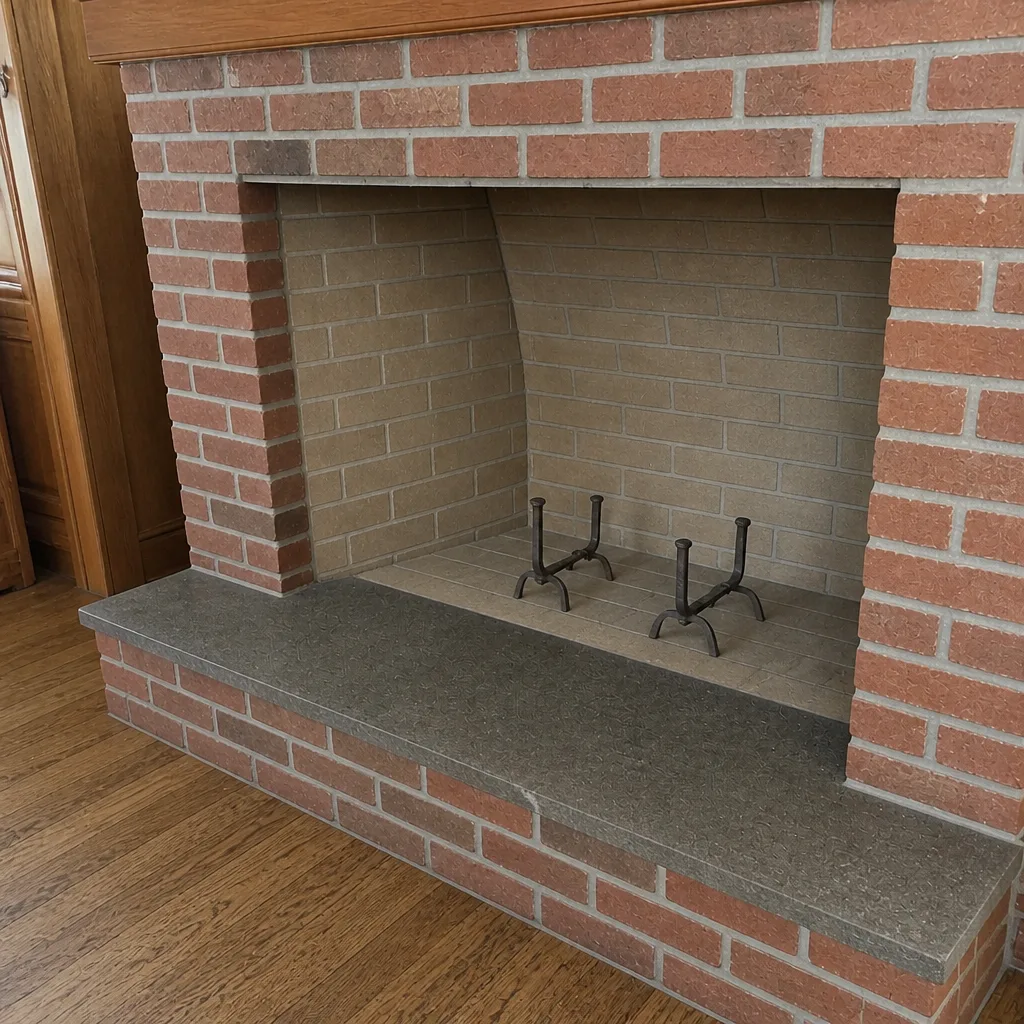 After
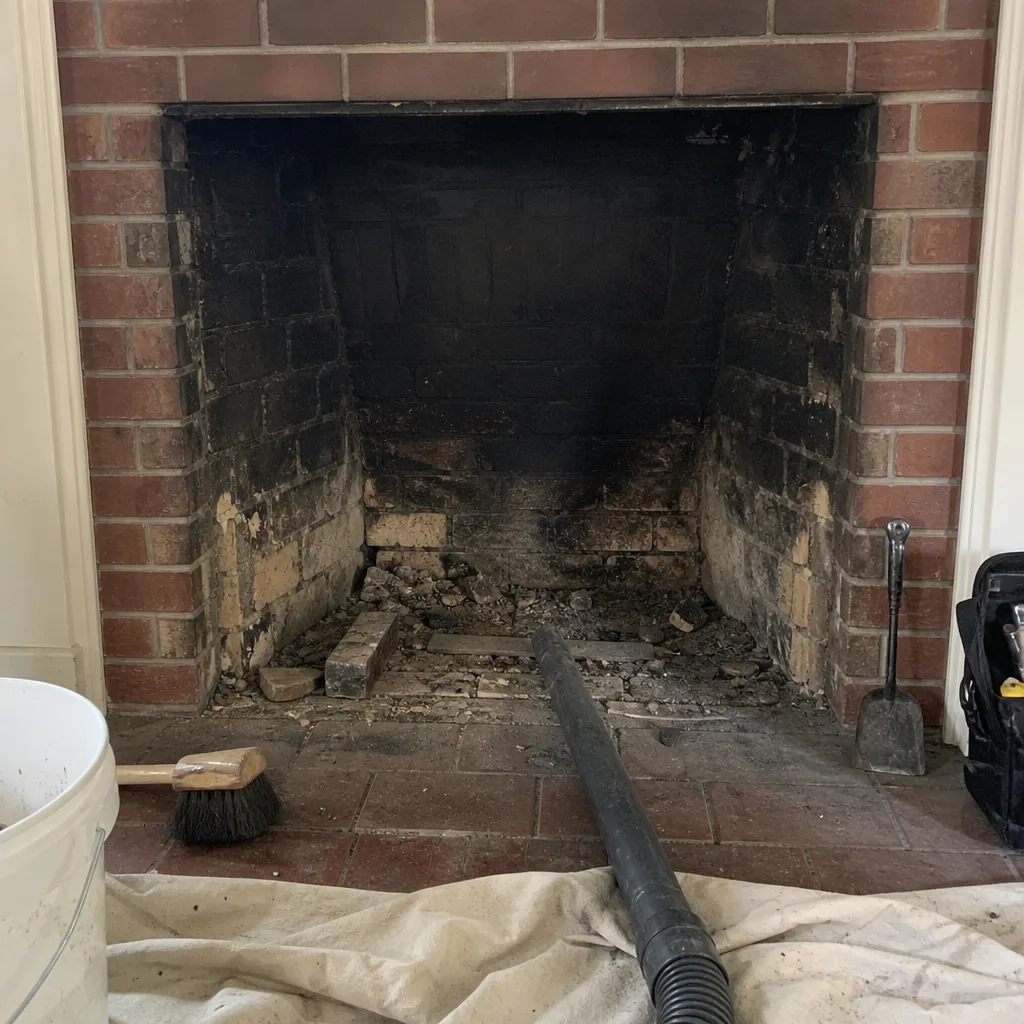 Before
 After
 Before
 After
When to Call a Professional
Some situations are clearly outside the DIY scope. If you smell smoke inside the house when the fire is lit, that’s a draft or blockage problem worth a professional look. If you see creosote on the damper or firebox walls, the flue almost certainly has more. If you’ve had a chimney fire – even a small one you think went out – the liner needs a Level 2 inspection before you burn again, because a fire can compromise a liner without any obvious exterior sign. If you’re buying a Wakefield home with an older masonry chimney, a Level 2 inspection before closing is the honest move. If your chimney has no cap, or the cap screen is torn, get it capped before nesting season. And if it’s simply been more than a year since the last cleaning, call for the annual sweep and inspection.
The temptation to skip it is understandable. Chimneys mostly behave themselves, and nothing bad happens on most days. But the things that fail – glazed creosote, a cracked liner, a missing cap – fail quietly, and by the time they show up as smoke in the room or visible damage, the repair bill is larger than the cleaning would have been. There’s also the carbon monoxide risk, which gives no warning at all.
Wakefield Chimney Sweep Pros offers free estimates in Wakefield – call (855) 337-2076. We answer 24/7. Fast dispatch from 7am to 7pm, Sunday through Friday.
Frequently Asked Questions
A standard chimney sweep in Wakefield typically runs $180 to $320 including a Level 1 inspection. A sweep combined with a Level 2 camera inspection usually falls in the $300 to $500 range. Call (855) 337-2076 for an exact quote – estimates are free.
Not necessarily. A liner that’s cracked or spalling may be a candidate for HeatShield restoration rather than full replacement, and the only way to know is a Level 2 camera inspection. You should see the footage or photos before agreeing to any liner work. Call (855) 337-2076 and ask for the camera scan first – estimates are free.
Once a year is the baseline recommendation for wood-burning chimneys in Wakefield. Homes that burn heavily, burn unseasoned wood, or have older masonry chimneys should plan on an annual Level 2 camera inspection as well. Call (855) 337-2076 to book the sweep and inspection together – estimates are free.
Creosote keeps accumulating, and at stage three it glazes onto the flue walls where a standard brush won’t remove it. That’s the material most associated with chimney fires. Separately, a cracked liner can leak carbon monoxide into the living space without any visible sign. Call (855) 337-2076 if the chimney hasn’t been cleaned in over a year – estimates are free.
A Level 1 is a visual check of the accessible parts of the chimney; a Level 2 adds a camera scan of the flue interior. Wakefield homes with older masonry chimneys, or with any recent change to the appliance or liner, typically need the Level 2. Call (855) 337-2076 to book the right level for your chimney – estimates are free.
Yes. Gas inserts still need annual inspection, and the flue still accumulates material. Gas chimneys are checked for condensation and liner corrosion rather than creosote. Call (855) 337-2076 and tell us what you burn – estimates are free.
The Bottom Line
Chimney cleaning is four layers, not one: inspection, sweep, liner condition, and draft. Getting all four in a single visit is what a full-spectrum chimney service means, and it’s what separates a documented cleaning from a brush pass. For Wakefield homeowners in older masonry homes, the Level 2 camera inspection is the step that makes the rest trustworthy – the liner is invisible without it. Everything else, from a Gelco cap to a HeatShield restoration to a DuraFlex liner replacement, should come out of what the inspection actually found. A provider who inspects first, shows you the evidence, and tells you what can safely wait is one worth trusting with the chimney. A provider who recommends big work before looking inside is not. Get in touch for the inspection first – that’s where the honest answers come from.
There’s no reason to put it off another season. Call us at (855) 337-2076 for a free estimate on chimney cleaning or inspection in Wakefield. We answer 24/7. Fast dispatch from 7am to 7pm, Sunday through Friday. If it’s a weekday and you want to book a visit this week, a call gets you on the schedule. If you’re calling outside dispatch hours, your call gets booked into the next opening, Sunday through Friday, 7am to 7pm.
Written by the team at Wakefield Chimney Sweep Pros.